
Kathy has been experiencing distressing gastrointestinal symptoms lately. Her bowel movements are unpredictable, ranging from extremely loose to painful constipation. Occasionally, she notices blood. She has been losing weight without dieting or exercising. Kathy also periodically feels intense pain and cramping in her abdomen. She does not enjoy eating as much as she used to, and she often feels exhausted. Finally, Kathy decides to consult her family doctor about her problem. After running some tests, her doctor informs her that she has an inflammatory bowel disease, or IBD, and explains how Crohn’s disease is diagnosed.
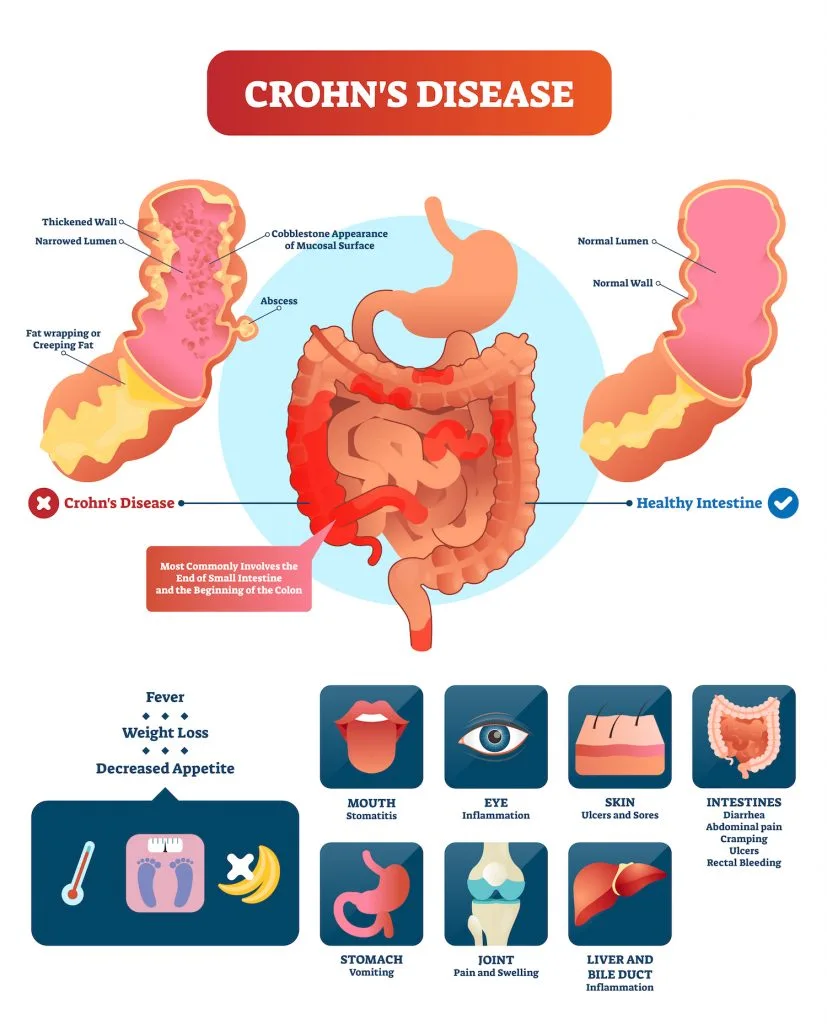
Common Crohn’s Symptoms
Unfortunately, Crohn’s disease causes a number of distressing symptoms. These symptoms can be temporary or permanent. Crohn’s symptoms are often progressive, meaning they get worse with time. Currently, however, although Crohn’s disease can be diagnosed, there is no known way to cure it. That is why the goal of Crohn’s treatments is to slow the progress of the disease.
It is unknown precisely what causes Crohn’s disease. Nonetheless, a number of factors are suspected, including genetics, environmental influences, and defects of the immune system. Nevertheless, while different researchers hold different hypotheses, none have yet been clinically proven. Research into the causes of Crohn’s is ongoing and shows promise.
First and foremost, Crohn’s affects the gastrointestinal (GI) tract. The GI tract is the length of intestine extending from the mouth to the anus. To explain this further, this includes the mouth, esophagus, stomach, and the small and large intestines. Like other IBDs, Crohn’s can cause inflammation. This inflammation can occur anywhere along the GI tract. This inflammation is an appropriate immune response in other circumstances. However, with Crohn’s, the inflammation often does not diminish over time. Consequently, this can lead to significant damage to the GI tract.
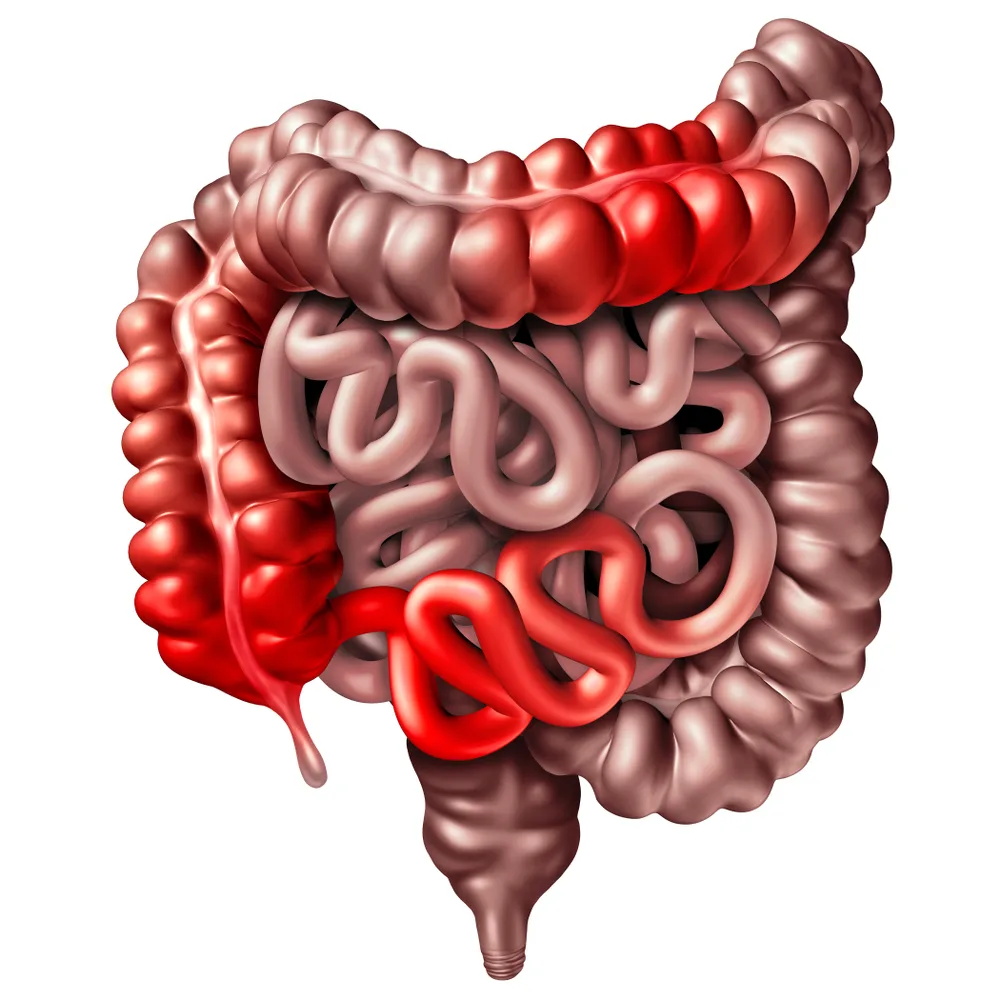
Because Crohn’s can affect the whole GI tract, its symptoms often spread far beyond into the rest of the body. In that case, the inflammation in the GI tract can result in reduced appetite and weight loss, both of which can have serious complications if left untreated. People with Crohn’s can also experience fevers and loss of energy.
Crohn’s disease often causes loose bowel movements and constipation, as well as abdominal cramping. Abdominal pain is also commonly reported by Crohn’s patients. In some cases, Crohn’s disease can even cause dizziness, shortness of breath, and headaches.

Crohn’s Disease and Long-term Complications
Long-term
complications are the result of severe Crohn’s symptoms. Patients whose Crohn’s
is severe may experience frequent vomiting and a high fever. They may also have
intestinal blockages and abscesses arising from inflammation. Abdominal pain
may not fade and even get worse. Sometimes, the abdomen swells. Nausea is more
likely, as are loose bowel movements and constipation.
Over
time, these intense symptoms can lead to even worse complications. Scar tissue
can build up and there may be an increase of tears in the anal canal (resulting
in rectal bleeding). Serious obstruction of the intestines may occur. In some
cases, patients develop fistulas, in which two structures in the body become
connected by abnormal tunnels. Many of these symptoms must be treated with
surgery. Fistulas sometimes require removal of the damaged portion of the GI
tract. Surgical scar tissue removal may be necessary. Sometimes, surgery is
designed to repair the damage done by Crohn’s.
Crohn’s
disease also contributes to an increased risk of colon cancer because of
inflammation of the colon. Patients may also experience vitamin and mineral
deficiencies, as chronic inflammation and blood loss can negatively impact
nutritional absorption. Crohn’s in the small intestine can contribute to the
development of kidney stones. Occasionally, Crohn’s disease can cause
inflammation in other areas of the body, such as the eyes, skin, and joints.
Clearly, Crohn’s poses serious health risks. This is why it is vital to talk to a doctor openly about any symptoms so that Crohn’s can be properly treated. This includes symptoms that may not seem to be connected to the GI tract.
How Is Crohn’s Diagnosed?
Doctors use a number of tests to confirm that Crohn’s has been diagnosed. These tests involve checking for symptoms of Crohn’s in various parts of the body based on the patient’s experiences.
Doctors look for ulcers and inflammation using barium X-rays. Smaller ulcers and inflammation can be more difficult to locate and require a colonoscopy to be detected. Colonoscopy also allows doctors to take a biopsy of small tissue samples to be sent for examination at a lab. These biopsies can show further evidence that Crohn’s is diagnosed.
Doctors ask patients to recount whatever they can remember about their bowel movements and whether they have noticed bleeding or other changes. Doctors may also order a blood test to check white blood cells or platelets. Increased levels can indicate infection and inflammation. Crohn’s could cause this inflammation, though doctors need to perform other tests to confirm this.
BPC-157 as a Treatment for Crohn’s

BPC-157
(Body Protective Compound) is a pentadecapeptide not found in nature but
synthetically produced. The compound is made up of amino acids. These amino
acids naturally occur in the human body but not in the combination or amount of
BPC-157.
Mounting evidence shows that, among other benefits, BPC-157 can help relieve the symptoms of Crohn’s disease. In fact, BPC-157 may help relieve IBD symptoms in general. This is because it can help the body reduce inflammation, heal damage, and reduce ulcers.
Kathy’s Solution
Kathy is feeling great. She has been following the treatment regimen prescribed by her doctor. On top of that, she has added a BPC-157 supplement. She has noticed fewer unpleasant bowel movements, less abdominal pain and cramping, more energy, and an improved appetite.
AgeForce BPC-157 Supplements
AgeForce BPC-157 skin patches are a top-of-the-line product designed to effectively deliver the compound into your system. AgeForce’s skin patches eliminate the need for BPC-157 injections and give a precise daily dosage. You can also place the patches directly onto affected areas to achieve the precision of injections. Check out our website now and find out how AgeForce’s BPC-157 skin patches can help relieve your Crohn’s symptoms once the disease is diagnosed.